Quick answer
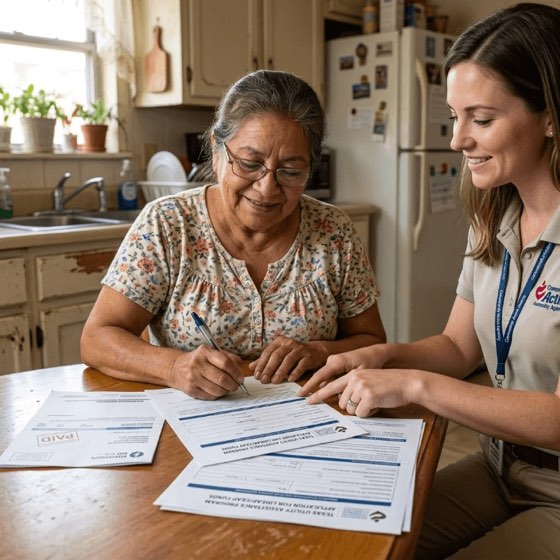
For utility assistance in Dallas County, call Dallas County Health and Human Services at 214-819-1848 to book a CEAP appointment. The county says CEAP is open, by appointment only, for households with income at or below 150% of the federal poverty guidelines (about $1,995 a month for one person in 2026), and it can take 4 to 6 weeks to process. If you live inside Dallas city limits, also call the City of Dallas intake line at 214-670-8416. Ask your electric or gas company for a payment extension or deferred payment plan, and dial 2-1-1 for charity funds. Applying for official programs is free.
Key facts
- Main program: CEAP through Dallas County Health and Human Services, by appointment only, no walk-ins.
- Income limit: at or below 150% of federal poverty guidelines, based on your last 30 days of income.
- Timing: the county asks for 4 to 6 weeks to process, so keep paying what you can.
- Limit: one CEAP application per household per calendar year.
- City help: the City of Dallas helps only people who live inside city limits, as funding allows.
- Texas protections: no electric disconnections in freezing weather or during a heat advisory.
Table of contents
- Utility assistance Dallas County options at a glance
- The county energy assistance program (CEAP)
- Income limits for CEAP
- Documents Dallas County asks for
- City of Dallas utility help
- Help with a Dallas water bill
- Help from your electric and gas company
- Texas rules that can stop a shutoff
- Charities, churches, and 211
- Lowering your bills for the long run
- Getting utility help, step by step
- Related guides
- Frequently asked questions
Utility assistance Dallas County options at a glance
No single office pays every kind of utility bill. The table shows where each type of help comes from, so you can contact more than one at the same time.
| Source | What it can help with | Who it serves | How to reach it |
|---|---|---|---|
| Dallas County CEAP | Electric and gas bills; some heating and cooling repairs | County residents at or below 150% of poverty | 214-819-1848, by appointment |
| City of Dallas Social Services | Electric, water, and gas bills, as funding allows | People who live inside Dallas city limits | 214-670-8416, weekday mornings |
| Operation WaterShare | Dallas Water Utilities bills for residential accounts | DWU customers in a temporary crisis | 214-651-1441 |
| Your retail electric provider | Payment extensions, deferred plans, partner funds | That company’s customers | Number on your electric bill |
| Atmos Energy | Installment plans; Sharing the Warmth funds through agencies | Atmos natural gas customers | Number on your gas bill, or 2-1-1 |
| Dallas County Weatherization | Insulation, weather-stripping, and other energy repairs | Low-income homes | 214-819-1909 |
| 211 Texas | Referrals to churches and charities with bill funds | Anyone | Dial 2-1-1 or 877-541-7905 |
The county energy assistance program (CEAP)
CEAP is the Texas version of the federal Low Income Home Energy Assistance Program. The state agency that oversees it, the Texas Department of Housing and Community Affairs, contracts with a local provider in each county. In Dallas County, that provider is Dallas County Health and Human Services (DCHHS). You apply with the county, not with the state.
When we checked the county’s CEAP page, it said the program is open, by appointment only, with no walk-ins. To book, call 214-819-1848, Monday through Friday, 8 a.m. to 5 p.m. The county warns that wait times on that line can be long because of high call volume, so call early in the day and be ready to leave a message. The CEAP office is at 2377 N. Stemmons Freeway, Suite 201, in Dallas.
According to the county, CEAP offers:
- Utility assistance toward electric and gas bills for income-eligible households. Payments go to the utility company, not to you.
- Heating and cooling unit repairs, which matter most during extreme heat or cold.
- Processing in the order received, so a complete application sent early is the best way to get help sooner.
The county’s 2026 requirements sheet says to allow 4 to 6 weeks for processing and to keep paying your bill, or make plans with your provider, until you get a payment or denial letter. It also limits CEAP to one application per household per calendar year, January through December. The county does not publish a fixed benefit amount; the payment depends on your income, household size, energy costs, and available funds.
If you already have a shutoff notice or no service, say so when you call. Under the state’s CEAP rules, crisis assistance must be provided within 48 hours in extreme weather or a disaster, and within 18 hours when a life is at risk, such as someone who depends on an oxygen machine. Our full guide to the Texas Comprehensive Energy Assistance Program explains how crisis help works statewide.
Income limits for CEAP
To qualify, your household income must be at or below 150% of the federal poverty guidelines. Dallas County looks at the gross income everyone in the home received in the 30 days before you apply, so the monthly figures below are the ones that matter most. These are based on the 2026 federal poverty guidelines; the county will check its current table at your appointment.
| Household size | 150% of poverty, per year | About per month |
|---|---|---|
| 1 | $23,940 | $1,995 |
| 2 | $32,460 | $2,705 |
| 3 | $40,980 | $3,415 |
| 4 | $49,500 | $4,125 |
| 5 | $58,020 | $4,835 |
| 6 | $66,540 | $5,545 |
For each person beyond six, add about $8,520 a year. You also must be a U.S. citizen, non-citizen national, or legal resident to receive CEAP help, according to the county. Statewide, CEAP gives priority to households with someone 60 or older, a person with a disability, a child 5 or younger, or very high energy costs compared with income.
Documents Dallas County asks for
Missing papers are the most common reason a CEAP case stalls. The county’s 2026 CEAP requirements sheet lists what every household member must bring:
- Proof of citizenship or legal status, such as a birth certificate, U.S. passport, certificate of citizenship, or naturalization certificate.
- Proof of identity, such as a photo ID or driver license, the physical Social Security card, a Medicare card, or immunization records. Complete Social Security numbers are needed for everyone in the home.
- Proof of gross income for the past 30 days for each member 18 or older: pay stubs, Social Security (current year), pension, unemployment, VA benefits, TANF, child support, workers’ compensation, and similar income.
- Front and back copies of your electric and gas bills.
- Extra papers if you have them, such as a SNAP letter or a housing letter.
One rule surprises many people. If any adult in the home reports no income, that person must bring a Texas Workforce Commission Wage Detail Inquiry dated within 30 days of the application. The county says it must be picked up in person at a Workforce Solutions career office, with the office stamp; a printout from online is not accepted. Bring a photo ID and Social Security card when you go. You can find the nearest office through Workforce Solutions Greater Dallas.
City of Dallas utility help
If you live inside Dallas city limits, the City of Dallas Office of Community Care runs a Social Services program for people in a temporary financial crisis. When we checked, its page listed utility bill assistance for electric, water, and gas, processed as funding allows. Rental assistance was listed as not accepting applications.
- Intake: call 214-670-8416, Monday through Friday, 9 a.m. to noon. The city does not take walk-ins.
- Area served: only addresses inside Dallas city limits. A Dallas mailing address in a suburb does not count.
- Documents: a government ID, Social Security cards for everyone in the home, your lease or proof of ownership, 30 days of income, the utility bill, and receipts for bills paid in the last 30 days.
Bilingual staff are available. If you live in Garland, Irving, Mesquite, Grand Prairie, or another suburb, ask 211 whether your city has its own fund. For rent problems at the same time, see our guide to rental assistance in Dallas County.
Help with a Dallas water bill
CEAP covers energy, not water. For a Dallas Water Utilities bill, there are two main routes.
Operation WaterShare. The city’s Operation WaterShare program, funded by customer donations and run by the Office of Community Care, helps families who are temporarily unable to pay their water bill. Help depends on eligibility and on how much money is in the fund. The city says the money can be used only for residential Dallas Water Utilities accounts, not for sprinkler-only meters, fees, or deposits. To ask for help, call Dallas Water customer service at 214-651-1441.
A payment plan. Ask the same customer service line about spreading a past-due balance over several bills. Asking before the due date gives you more options than waiting for a disconnection notice.
If your water comes from another city, such as Garland or Richardson, call that city’s utility billing office and ask about payment plans and any local hardship fund.
Help from your electric and gas company
Most of Dallas County has a competitive electric market, which confuses many people. Oncor owns the poles and wires and handles outages, but it does not send you a bill. You pay a retail electric provider, such as TXU Energy, Reliant, or another company you chose. That retail company is the one that can give you more time. Some areas, such as Garland, are served by a city-owned utility instead.
Here is what two large Dallas-area companies say they offer:
- TXU Energy lists payment assistance options including payment extensions, deferred payment plans, waived or split deposits for some customers, and waived late fees for customers on SNAP or Medicaid. Its TXU Energy Aid fund is handed out through local agencies; TXU tells customers to dial 2-1-1 and ask for electricity bill help. Call 800-242-9113.
- Atmos Energy, the main natural gas company in the area, offers no-fee installment plans and budget billing. Its Sharing the Warmth program funds partner energy assistance agencies; Atmos says more than $4.9 million was donated through the program in 2025. Dial 2-1-1 to find a partner agency near you.
If you have a different provider, call the number on your bill and ask three questions: Can I get a payment extension? Can I set up a deferred payment plan? Do you have a bill-help fund or a partner agency? Write down the name of the person you spoke to and the date.
Texas rules that can stop a shutoff
Texas utility rules give some protection while you look for help. According to the national LIHEAP Clearinghouse summary of state disconnection rules, Texas electric providers may not disconnect service:
- When the temperature is below freezing (32°F).
- When a heat advisory is in effect, or has been in effect in the last two days.
- When a disconnection would cause someone in the home to become seriously ill or more seriously ill. This protection can last up to 63 days and can be renewed, and it usually requires a form from a doctor.
If someone in your home uses life-support or medical equipment that needs power, ask your retail electric provider how to apply for critical care or chronic condition status. These protections delay a shutoff; they do not erase the bill. Use the time to apply for CEAP and set up a payment plan.
Watch for scams: callers who threaten to cut your power within the hour unless you pay with a gift card or payment app are not your utility. Hang up and call the number printed on your bill.
Charities, churches, and 211
When public funds are slow or used up, local charities can sometimes pay part of a bill. Their money changes from month to month, so the fastest way to learn what is open is 211 Texas. Dial 2-1-1 or 877-541-7905 and ask for electric, gas, or water bill help in your ZIP code.
Groups that often help in the Dallas area include Catholic Charities Dallas and the Salvation Army in North Texas, along with agencies that receive TXU Energy Aid or Atmos Sharing the Warmth funds. Many churches help with part of a bill once a year; our guide to churches that help with utility bills explains how to ask. Bring your bill and shutoff notice, since most charities pay the utility directly.
Lowering your bills for the long run
One payment solves this month. Lower bills help every month after that.
- Weatherization. Dallas County runs a Weatherization Program that makes energy improvements, such as insulation and weather-stripping, for low-income homes. Call 214-819-1909 to ask about the waiting list.
- Check your electricity plan. In the competitive market, plans with high rates or monthly fees can raise your bill. When your contract ends, compare plans before it rolls over to a higher rate.
- Budget billing. Atmos and many electric providers can average your bill over the year, so summer and winter spikes are easier to plan for.
- Free up cash with SNAP. Food benefits leave more money for bills. For October 2026 through September 2027, the SNAP gross income limit for one person is $1,729 a month, and utility costs can raise your benefit.
Getting utility help, step by step
- Call your utility first. Ask for a payment extension or deferred plan, and get the new due date in writing.
- Book a CEAP appointment at 214-819-1848. Ask whether your case counts as a crisis if you have a shutoff notice.
- Gather documents, including 30 days of income for every adult and a stamped TWC wage inquiry for anyone with no income.
- Call the City of Dallas at 214-670-8416 if you live inside city limits, or 214-651-1441 about a water bill.
- Dial 2-1-1 for charity funds, TXU Energy Aid, and Atmos partner agencies.
- Keep paying what you can while you wait, and keep copies of every letter and receipt.
Help is free. Dallas County, the City of Dallas, 211, and utility assistance programs never charge to apply. National Relief Program is not a government agency.
Related guides
- Texas utility assistance
- Emergency help with utility bills
- LIHEAP energy assistance
- Utility relief programs
Frequently asked questions
Where do I apply for utility assistance Dallas County offers?
Call Dallas County Health and Human Services at 214-819-1848 to schedule a CEAP appointment. The county says the program is by appointment only and does not take walk-ins.
How long does Dallas County CEAP take?
The county asks applicants to allow 4 to 6 weeks for processing. Keep paying what you can, or set up a plan with your provider, until you get a payment or denial letter.
What if I have no income to show for CEAP?
Each adult with no income must bring a Texas Workforce Commission Wage Detail Inquiry dated within 30 days. It must come from a Workforce Solutions office in person, with the office stamp.
Does the City of Dallas help with utility bills?
Yes, for people who live inside Dallas city limits, as funding allows. Call the intake line at 214-670-8416 on weekday mornings; walk-ins are not accepted.
Can Oncor help me pay my electric bill?
Usually not. Oncor runs the wires, but your retail electric provider sends the bill. Call the company on your bill about payment plans and its bill-help fund.
Sources
Facts on this page were checked against these sources on October 29, 2026. If a source and this page ever disagree, follow the source.
- Dallas County HHS: Comprehensive Energy Assistance Program
- Dallas County HHS: 2026 CEAP program requirements (PDF)
- City of Dallas: Social Services and Support Program
- City of Dallas: Operation WaterShare
- TXU Energy: Payment assistance options
- Atmos Energy: Bill assistance
- LIHEAP Clearinghouse: State disconnection policies
- LIHEAP Clearinghouse: Texas crisis assistance definitions
- Workforce Solutions Greater Dallas: Visit a center
- 211 Texas
- Catholic Charities Dallas
- The Salvation Army North Texas
This guide is general information. Program hours, funding, and rules are set by each agency and utility and can change. National Relief Program is an independent website and is not affiliated with Dallas County, the City of Dallas, any utility company, or any government agency.
Before you apply: program rules, amounts, and deadlines change. Always confirm details with the official agency or program administrator. Applying for government benefits is free.
National Relief Program is an independent guide, not a government agency. Spotted an error? Email support@nationalreliefprogram.org.